How the Music of Video Games Has Shaped Our Connection to Music Today
Blog ·
We’ve come a long way in the world of video game music, from early consoles only playing music in single tones to game soundtracks now winning Grammy Awards.
Many can attest to the nostalgic ties felt toward games that took the world by storm in the 80s, among the likes of Super Mario Bros., Tetris and The Legend of Zelda. But what is it that makes the music of these games so iconic and unique?
Koji Kondo’s genius behind such illustrious compositions as the Super Mario game soundtrack comes down to the simple and essential chord tones used: the root, third, and fifth. Not only are they the easiest notes to sing along to, but they also produce the most consistent and satisfying sound. This was a challenging task for Kondo as the music range was limited to an 8-bit sound chip.
Kondo’s success in building a looping soundtrack with limited resources paved the way for artists such as self-taught pianist and composer Nobuo Uematsu, who wrote the soundtracks for the first nine Final Fantasy games. Uematsu’s work on the popular game franchise is recognised for evoking a cinematic feel, creating the perfect symphonic experience for immersive gameplay.
Fast forward to 2013 and American film and video game composer Austin Wintory makes music history for earning the first Grammy Award nomination for a full video game soundtrack for Journey in the ‘Best Score Soundtrack for Visual Media’ category. This year, Wintory won his first Grammy award for Sword of the Sea in the category of ‘Best Score Soundtrack for Video Games and Other Interactive Media’, a category only made possible as a result of Wintory's first game nomination in 2013.
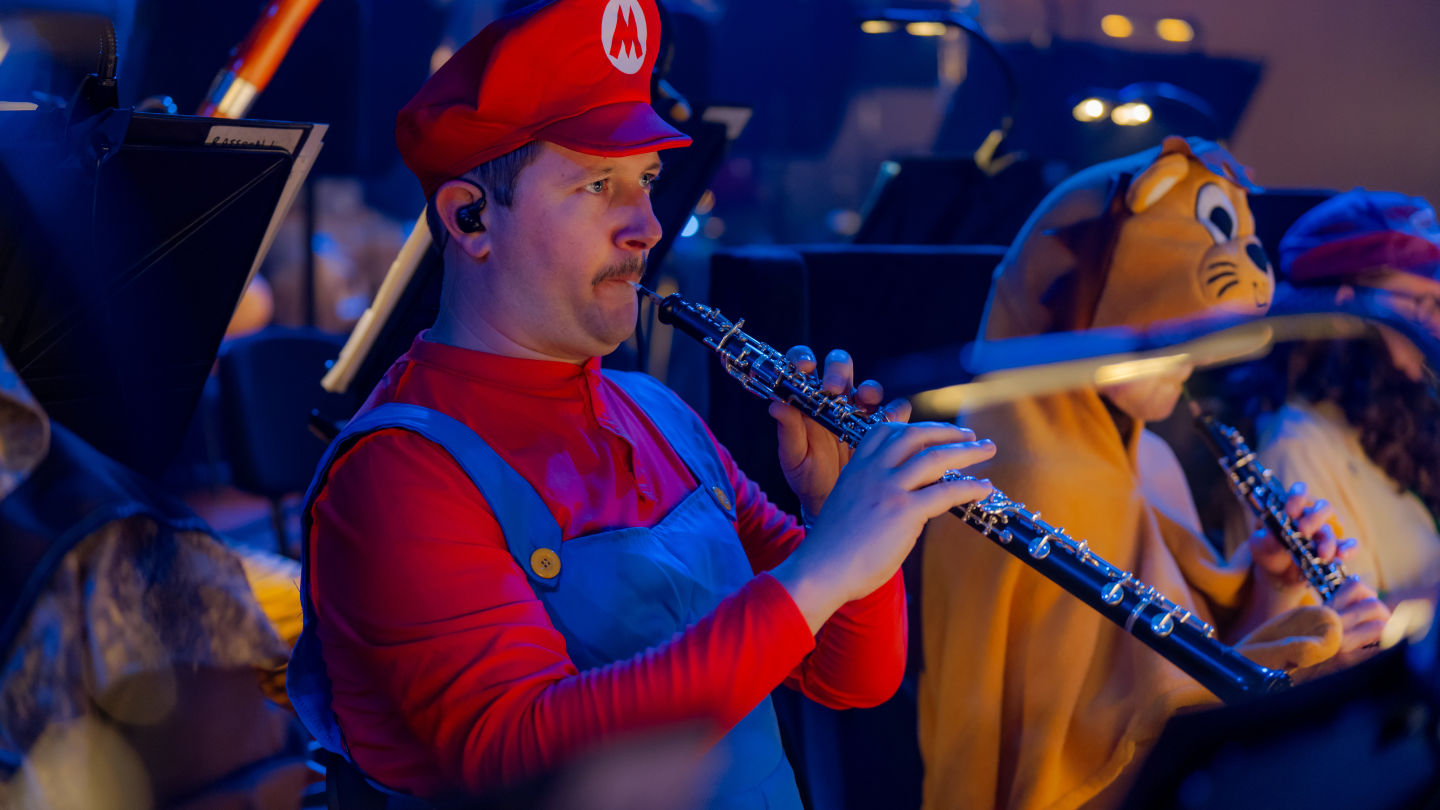
Much like opera and ballet, video game music tells a story. As game soundtracks have increasingly topped Spotify charts and become a significant catalyst for orchestral music listening worldwide, live performances are introducing this now culturally recognised art form to new audiences, allowing fans to experience the stories that captivated them in the digital world within the concert hall.
But don’t just read about video game music, experience it live with the power of a full orchestra in The Music of Video Games, coming to QPAC’s Concert Hall from the 24 to 25 July 2026, where you can expect to hear QSO play music from each of the composers mentioned in this very blog! Grab your seat, press start and experience the magic of gaming’s greatest soundtracks. Book now! ⬇
QSO violist Gregory McNamara shares with us why he believes video games have improved his playing skills!